Monsoon Farming: Challenges & Solutions
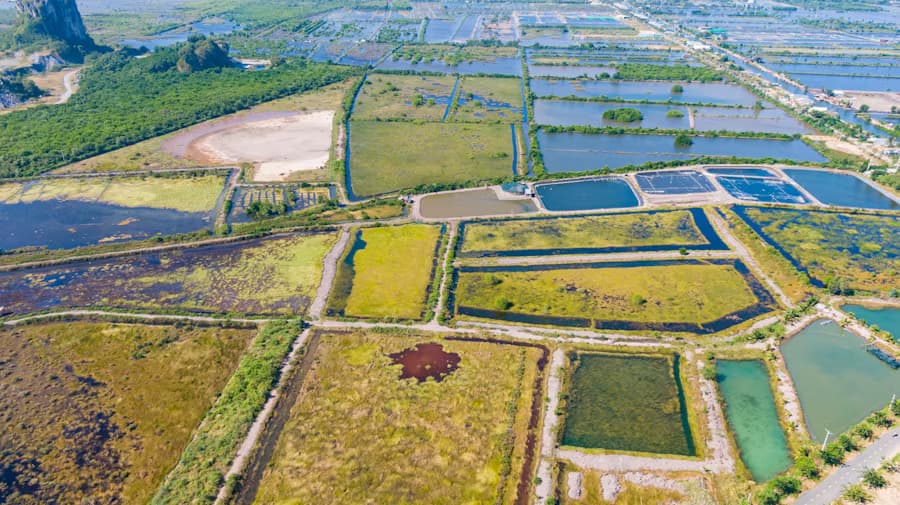
Bengal's monsoon season — roughly June through September — brings heavy rainfall, dropping salinity levels and straining pond water quality in ways that can devastate shrimp populations. For our farming partners, it's the most technically demanding period of the year.
The primary challenge is salinity crash. Vannamei shrimp can tolerate a wide range (0.5–45 ppt), but rapid drops — from 15 ppt to 2 ppt in 48 hours after heavy rain — cause osmotic stress that weakens immune response and increases disease risk.
Our monsoon protocol includes raised pond bunds to prevent overflow, emergency aeration reserves, and a salinity monitoring schedule that doubles in frequency during peak rain periods. When a crash is predicted, farmers can pre-treat ponds with mineral supplements to buffer the shock.
Disease pressure also rises sharply during monsoon, since stressed shrimp are more susceptible to opportunistic infections like White Spot Syndrome Virus. We push partner farms to increase health-monitoring frequency during this period — daily visual checks for lethargy or discoloration rather than the twice-weekly checks that suffice in drier months — since early detection is the only real defence once an outbreak starts.
Water exchange planning becomes a balancing act too. Heavy rain can flood a pond with excess freshwater, but exchanging water during a storm risks pulling in runoff contaminated with agricultural chemicals from surrounding land. Our farmers are trained to time exchanges around rainfall forecasts rather than reacting to water levels alone.
Harvest timing also shifts during monsoon. We encourage partial early harvests before the heaviest rainfall periods, reducing biomass in the pond and lowering the risk of a total loss if conditions deteriorate rapidly.